Separation

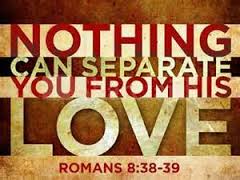
“For I am sure that neither death nor life, nor angels nor rulers, nor things present nor things to come, nor powers, nor height nor depth, nor anything else in all creation, will be able to separate us from the love of God in Christ Jesus our Lord.” Romans 8:38-8 ESV
separate 1

Sometimes people remark that I may confuse the issue because of little details that don’t tie up all the loose ends. For example, the concept of sin and separation from God.

I grew up believing when I sinned God was angry at me. That sin was repulsive to God. That He would turn His back to me. That sin prevented God from blessing me. In some ways, it seemed that Sin was bigger than God. That God didn’t want to have anything to do with me because of that sin I committed last night without even being aware of it. Somewhere, someplace I was led to believe that I was the problem of sin. That when I sinned, God separated Himself from me.

It now amazes me more than ever what happens when the truth becomes known. For example, Father/Son/Spirit God is truly greater than any sin ever committed or known on planet earth. Jesus, who represents God on earth for humanity to witness, walked among sinners. He worked, played, and ate with sinners. He deliberately spent time with them. He didn’t separate himself from sinners. Instead he conquered sin for us.

When we sin, God doesn’t walk away from us. He doesn’t turn his back to us. Instead, he pursues us even more so. He knows the ramifications of sin. He witnessed it with Satan. Yet He still allowed Satan to hang around heaven (Job 1:6). When Adam and Eve sinned, He didn’t walk away from them. Instead he came looking for them. It was they who hid from God. It was they who became afraid and sought to hide from God.

When we sin, we hurt ourselves. We hurt those around us. Our mates, children, parents, friends, and associates all are recipients of sin’s poison. God doesn’t turn away from us. Those around us may, but God doesn’t. He wants us to realize his forgiveness. And because of his forgiveness, he wants us to repent. He wants us to be truly thankful for what He does for us. Showering us with constant grace and care.

Whenever the nation Israel fell into the practice of idolatry, God would patiently wait for the proper moment before he would intercede and bring the nation back into the fold. Whenever we sin, God likewise waits patiently for us before he intercedes and brings us back to him. When King David committed adultery and murder, God used the prophet Nathan to bring the sin to his attention. When realizing his sin, David quickly repented. God didn’t disown David. Instead, He helped David to grow in maturity and responsibility. He does the same for you and me today.

Sin doesn’t separate us from God. It blinds us from seeing God. It may block God’s Spirit from freely flowing through us. But God is always there. He loves us. Wants what is best for us. In some ways, He uses sin to help us appreciate and grow in his grace. Like King David, when we are convicted of sin, we quickly repent. In repentance, we are thankful for the life He shares with us, His grace, His mercy, and everything else he has reserved for us.

Rooting For You in Christ!

Dr. Mike

Executive Chair, Consultant, Encourager
Marketplace Bible Institute
& Resource Center, Inc
Author of e-Books:
 *  Great Business Emulates a Good God
 *  Be Radical…Follow Christ!
 *  Simply The Messenger
 *  Unequally Married

Learn. Integrate. Grow.

Theology 101

“All Scripture is breathed out by God and profitable for teaching, for reproof, for correction, and for training in righteousness…” 2 Timothy 3:9

theology 1

Why is theology important?

Recently we had a lively discussion regarding the importance of theology. The majority of the group believed that the Bible was all that they needed. That theology was man’s attempt to lead people astray. They looked at the Bible through the eyes of one simple worldview. They admitted that all they knew was what they initially learned. They didn’t want to take the time to understand why their brothers and sisters in other denominations believed what they do. As far as they were concern, what they believed was right and others were wrong. They didn’t realize that everyone already has a theological belief. The question is “what is yours?”

First, theology is simply the study of God. It studies the Bible from a wholesome point of view. Instead of extracting pieces of the Word at a time, it looks to bring all the pieces together to form a coherently understanding of God’s hand in the matter.

There is a study of God for a multitude of different subjects. For example, the theology of salvation, the theology of grace, the theology of creation, the theology of the Kingdom of God, the theology of (add whatever subject you can think of and there probably is already a formal study on the matter).

The thought that what one believes may not be absolutely correct bothers some people. The idea that others may have more truth on a subject matter may also be humbling for a few.
The relevancy of any theological belief is simply the Christ-like fruit it bears. If love, joy, and peace is the mainstay of a person’s life, then maybe one may want to listen and learn. We all have a theological belief system in play. The question comes to how close is the study to reality and truth. Of course reality and truth is measured through one person: Jesus Christ. And yes there is a theology of Christ, called Christology.

The more we come to know and understand God, the more we are humbled and at awe of His divine work and physical masterpiece. The better we understand the beliefs of others, the easier it becomes to communicate and relate with them. Therefore, when one’s theology is grounded in Christ, His Word, and Spirit, the journey through life becomes more immeasurable with gratitude, love, and joy.

I may not agree with others theological position at times, but I do love and respect them. My heart fully understands that whoever may be closer to the truth, God in His time will reveal that to us too. The important thing is to continue grow in the grace and knowledge of Jesus Christ. That is a simple theological position that every mature believer I meet quickly agrees too. And so do I.

Rooting For You in Christ!

Dr. Mike

Executive Chair, Consultant, Encourager
Marketplace Bible Institute
& Resource Center, Inc
Author of e-Books:
* Great Business Emulates a Good God
* Be Radical…Follow Christ!
* Simply The Messenger
* Unequally Married

Learn. Integrate. Grow.


Who? What?


…“knowledge” puffs up, but love builds up.” 1 Corinthians 8:1 ESV

who what1

One lesson we all eventually learn is when we inappropriately place the “what” before the “who.”

When reading the gospel accounts of Jesus, I am always intrigued by His discussions with the religious teachers. Maybe it was their intent to trap him in His interpretation of the law. Or maybe it was their self-righteous attitude in their misunderstanding of the law. Than again, maybe I am reading more into it than what is displayed. But the teachers that tried debating with Jesus seem to place greater emphasis on the “what” (information/knowledge) rather than the “who” (a loving relationship with the person).

For example, when seeking truth most of us seek information. Yet God teaches that Truth is personalized in Jesus Christ. From the central core of Jesus, all other truths prevail. The who comes before the what.

When Jesus was presented with the women caught in adultery, the accusers (most likely religious people who place the what above the who) wanted him to agree with their interpretation of the Law. Jesus, in his graceful and impactful manner simply began to scribble words in the sand. By the time he stopped, all the accusers fled. Jesus than forgave her sins and extended mercy to a fellow human being. He placed the who before the what.

Now the “what” is important. Knowledge leads to understanding and wisdom. But knowledge without relationship leads to legalistic, emotional brutality. Therefore, as Jesus demonstrated, the “who” takes precedence over the “what.”

So the next time you feel like pontificating what you know, stop. Instead, emphasize the “who.” In other words, let love lead. For from love, the “what” is more easily presented. From love, the “who” is honored and respected. From the basis of love, everything else falls into place. Yes, the “what” may be important, but the “who” is always more important.

Rooting For You in Christ!

Dr. Mike

Executive Chair, Consultant, Encourager
Marketplace Bible Institute
& Resource Center, Inc
Author of e-Books:
 *  Great Business Emulates a Good God
 *  Be Radical…Follow Christ!
 *  Simply The Messenger
 *  Unequally Married